

How does a Brake System Trainer simulate different brake pedal forces?
As a leading supplier of Brake System Trainers, I often get asked about how our products simulate different brake pedal forces. This is a crucial aspect of brake system training, as it allows trainees to experience and understand the various scenarios they might encounter in real - world driving situations. In this blog post, I'll delve into the mechanisms and technologies we use to achieve accurate simulation of different brake pedal forces.
The Basics of Brake Pedal Force Simulation
Before we explore the specific methods, it's important to understand the basic concept of brake pedal force. When a driver presses the brake pedal, they apply a certain amount of force, which is then transmitted through the brake system to slow down or stop the vehicle. The amount of force required can vary depending on factors such as vehicle speed, load, and road conditions.
Our Brake System Trainers are designed to mimic these real - world scenarios. We use a combination of mechanical, hydraulic, and electronic components to simulate the different brake pedal forces accurately.
Mechanical Components
The mechanical components of our Brake System Trainers play a fundamental role in simulating brake pedal forces. The brake pedal itself is usually connected to a lever mechanism. This lever is designed to replicate the mechanical advantage that exists in a real vehicle's brake system. When the trainee presses the pedal, the lever transfers the force to other components in the simulation.
We also use springs in the mechanical assembly. These springs can be adjusted to vary the resistance that the trainee feels when pressing the brake pedal. For example, a stiffer spring will require more force to compress, simulating a situation where a greater braking force is needed, such as when the vehicle is carrying a heavy load.
Hydraulic Systems
Hydraulics are an essential part of most real - world brake systems, and our Brake System Trainers make use of hydraulic principles to simulate brake pedal forces. A hydraulic master cylinder is connected to the brake pedal. When the pedal is pressed, the force is transferred to the master cylinder, which in turn pressurizes the brake fluid.
The pressure in the hydraulic system is then transmitted to the brake calipers or wheel cylinders. By adjusting the hydraulic pressure, we can simulate different braking scenarios. For instance, in a situation where the brakes need to be applied suddenly, the hydraulic pressure can be increased rapidly. Our trainers are equipped with valves that can regulate the flow of brake fluid and adjust the pressure according to the desired simulation.
Moreover, we can use different viscosities of brake fluid in the training system to mimic real - world conditions. Thicker fluids may require more force to pump through the system, similar to how cold weather can affect the performance of a real brake system.
Electronic Intervention
In modern vehicles, electronic systems play a significant role in the braking process. Our Brake System Trainers incorporate electronic components to simulate these advanced features. For example, we can simulate the operation of an Anti Lock Brake System (ABS).
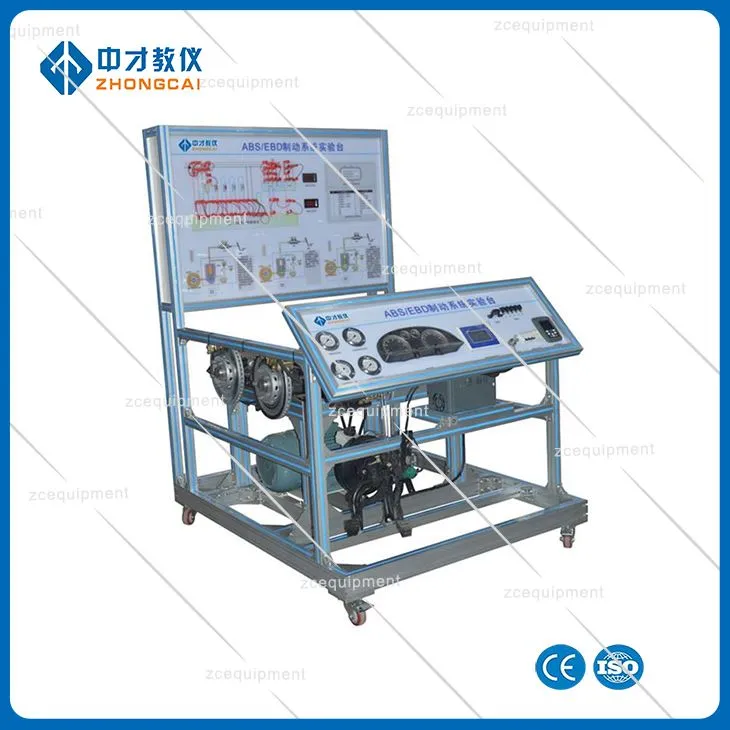
The ABS is designed to prevent the wheels from locking up during hard braking. Our trainers use sensors to detect the speed of the simulated wheels and an electronic control unit (ECU) to adjust the brake pressure accordingly. When the trainee presses the brake pedal hard, the ECU can rapidly modulate the pressure in the hydraulic system, creating a pulsating feeling at the brake pedal, just like in a real - world ABS situation.
We also have the ability to simulate other electronic brake - related systems, such as electronic stability control (ESC). These systems can intervene to correct the vehicle's handling during braking and cornering, and our trainers can replicate these complex interactions, giving trainees a comprehensive understanding of modern brake systems.
Simulating Different Driving Conditions
To make the training as realistic as possible, our Brake System Trainers can simulate different driving conditions. For example, on a wet or icy road, the braking distance will be longer, and the brake pedal force required to stop the vehicle may be different compared to dry conditions.
We can simulate these surface conditions by adjusting the friction coefficient between the simulated tire and the road surface in the trainer. A lower friction coefficient will reduce the braking efficiency, and the trainee will need to apply more force on the brake pedal to achieve the same level of deceleration.
In addition, we can simulate different vehicle speeds. A faster - moving vehicle will require more braking force to stop. By adjusting the parameters in our simulation software, we can change the initial speed of the virtual vehicle and the trainee will experience the corresponding change in the brake pedal force required to slow down or stop.
Applications of Brake System Trainers
Brake System Trainers are used in a variety of settings, including automotive training schools, vocational institutions, and vehicle maintenance workshops. Trainees can learn about the different components of a brake system, how they interact, and how to diagnose and repair common brake problems.
Our ABS Braking System Trainer is particularly popular among schools and workshops. It provides a hands - on way for trainees to understand the operation of an ABS, which is a critical safety feature in modern vehicles.
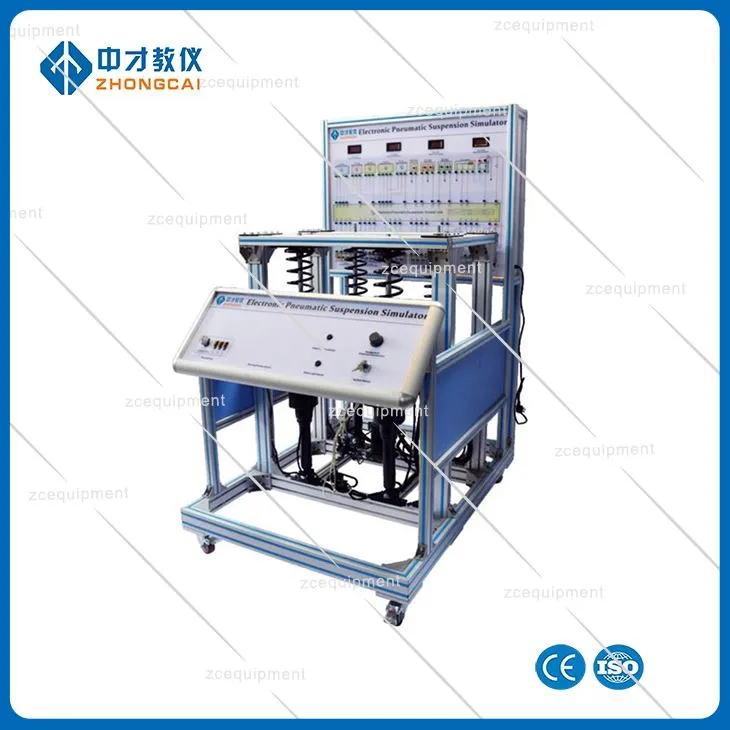
Another related product is our Suspension System Training Simulator. Although it focuses on the suspension system, it also interacts with the braking system. Trainees can learn how the suspension affects the vehicle's handling and braking performance.
Contact Us for Procurement and Consultation
If you're involved in automotive training or vehicle maintenance and are interested in adding our Brake System Trainers to your facilities, we'd be delighted to hear from you. Our products are designed with the latest technology and engineering expertise to provide the most realistic and effective training experience.
We offer a range of customizable options to meet your specific needs. Whether you need a basic trainer for introductory courses or a more advanced system with all the latest electronic simulation features, we have a solution for you. Get in touch with us to discuss your requirements and explore how our Brake System Trainers can enhance your training programs.
References
- Smith, J. (2020). Automotive Brake Systems: Principles and Design. Chicago: AutoTech Publishing.
- Johnson, R. (2019). Hydraulic Systems in Modern Vehicles. Toronto: Vehicular Press.
- Lee, K. (2021). Electronic Brake Control Systems: Function and Maintenance. Sydney: AutoBook Ltd.


