

In the realm of automotive education and training, a Brake System Trainer plays a pivotal role. As a dedicated supplier of Brake System Trainers, I am well - versed in the various training programs that are available to those who wish to master the intricacies of brake systems. This blog post will delve into the different types of training programs, their significance, and how our products can support these educational initiatives.
Basic Brake System Training
The foundation of any brake system training program is the basic understanding of how brakes work. This includes the study of the fundamental components such as brake pads, rotors, calipers, and the master cylinder. A basic training program typically starts with an introduction to the principles of friction and how it is used to slow down or stop a vehicle.
Trainees learn about the different types of brake systems, such as disc brakes and drum brakes. Disc brakes are widely used in modern vehicles due to their superior performance and reliability. They consist of a rotor that rotates with the wheel and a caliper that squeezes the brake pads against the rotor to create friction. On the other hand, drum brakes use brake shoes that press against the inside of a drum to slow down the vehicle.
Our Brakes Hydraulic Dual - circuit Brakes training equipment is an excellent tool for this basic training. It allows trainees to visualize and understand the hydraulic principles behind the dual - circuit brake system. The dual - circuit design provides an extra layer of safety, as if one circuit fails, the other can still provide some braking power.
Advanced Hydraulic System Training
Once trainees have a solid grasp of the basic brake components, they can move on to advanced hydraulic system training. The hydraulic system is the heart of the brake system, as it transfers the force applied by the driver on the brake pedal to the brake pads or shoes.
In this training program, trainees learn about the different hydraulic components such as the master cylinder, brake lines, and wheel cylinders. They study how the hydraulic fluid is pressurized and how it travels through the system to actuate the brakes. They also learn about the importance of proper brake fluid maintenance, including fluid type, change intervals, and how to bleed the brakes to remove air bubbles.
Our training equipment provides hands - on experience with hydraulic systems. Trainees can practice tasks such as filling the master cylinder, bleeding the brakes, and diagnosing hydraulic leaks. This practical experience is invaluable in preparing them for real - world scenarios.
Anti - Lock Braking System (ABS) Training
The Anti - Lock Braking System (ABS) is a crucial safety feature in modern vehicles. It prevents the wheels from locking up during hard braking, which helps the driver maintain steering control and reduces the stopping distance.
An ABS training program focuses on understanding how the ABS works, its components, and how to diagnose and repair ABS - related problems. Trainees learn about the ABS sensors, which monitor the wheel speed, the ABS control module, which processes the sensor data, and the hydraulic modulator, which adjusts the brake pressure at each wheel.
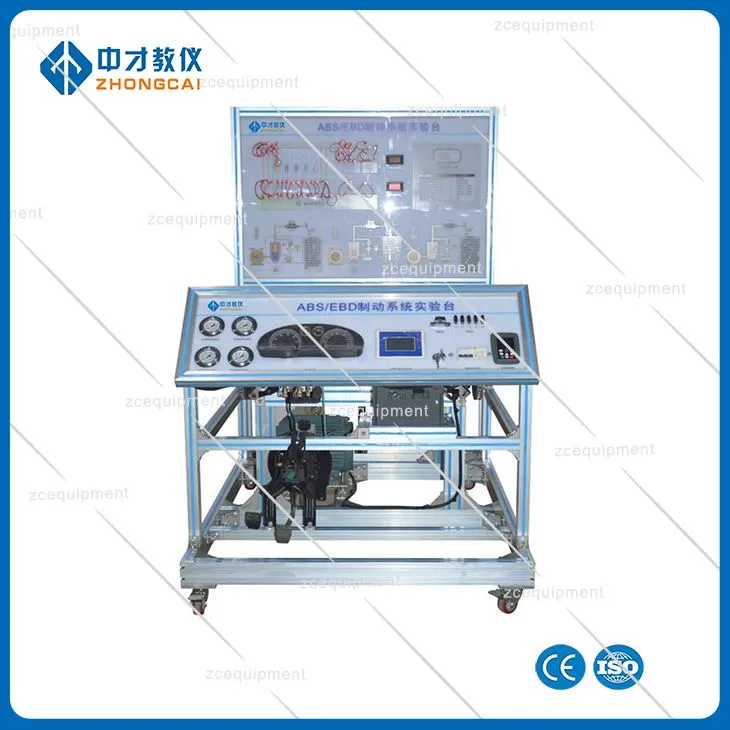
Our ABS Trainer is specifically designed for this type of training. It allows trainees to simulate different driving conditions and observe how the ABS responds. They can also practice troubleshooting common ABS faults, such as sensor malfunctions and hydraulic leaks.
Electronic Stability Control (ESC) Training
Electronic Stability Control (ESC) is another advanced safety feature that works in conjunction with the brake system. It helps the driver maintain control of the vehicle during emergency maneuvers or on slippery roads by selectively applying the brakes to individual wheels.
In an ESC training program, trainees learn about the principles of ESC, its components, and how it interacts with other vehicle systems. They study how the ESC system uses sensors to detect the vehicle's yaw rate, lateral acceleration, and wheel speed, and how it uses this information to apply the brakes and adjust the engine torque as needed.
Our training equipment provides a comprehensive understanding of ESC systems. Trainees can experiment with different scenarios and see how the ESC system improves the vehicle's stability and safety.
Automotive Airbag and Brake System Integration Training
In modern vehicles, the airbag system is closely integrated with the brake system. When a sudden deceleration is detected, such as during hard braking or a collision, the airbag system is triggered to protect the occupants.
Our Automotive Airbag Teaching Board electrical trainer board is used in this training program. Trainees learn about the sensors that detect the deceleration, the control module that triggers the airbags, and how the airbag system is wired and connected to the rest of the vehicle's electrical system. They also study the importance of proper maintenance and inspection of the airbag system to ensure its reliability.
Significance of These Training Programs
These training programs are essential for several reasons. Firstly, they ensure that automotive technicians have the necessary skills and knowledge to diagnose and repair brake systems effectively. With the increasing complexity of modern brake systems, technicians need to be well - trained to handle the various components and technologies.
Secondly, these training programs contribute to road safety. Well - trained technicians can ensure that vehicles' brake systems are in proper working condition, reducing the risk of accidents caused by brake failures.
Finally, these programs are important for the automotive industry as a whole. As new technologies are introduced, such as electric and hybrid vehicles with regenerative braking systems, the demand for skilled technicians will continue to grow. By providing high - quality training programs, we are helping to meet this demand and ensure the continued growth and development of the industry.
Why Choose Our Brake System Trainers
Our Brake System Trainers are designed with the latest technology and industry standards in mind. They are built to be durable, reliable, and easy to use. Our trainers provide a hands - on learning experience that mimics real - world scenarios, allowing trainees to gain practical skills and confidence.
We also offer comprehensive support and training materials. Our team of experts is available to provide technical assistance and guidance to both trainers and trainees. We regularly update our training programs to keep up with the latest trends and technologies in the automotive industry.
Conclusion
In conclusion, the training programs available for a Brake System Trainer cover a wide range of topics, from basic brake components to advanced safety features. These programs are essential for training skilled automotive technicians and ensuring road safety. As a supplier of Brake System Trainers, we are committed to providing high - quality training equipment and support to meet the needs of the automotive education and training community.

If you are interested in purchasing our Brake System Trainers or learning more about our training programs, we invite you to contact us for a detailed discussion. We look forward to working with you to enhance the skills and knowledge of automotive technicians and contribute to the safety and efficiency of the automotive industry.
References
- Automotive Brake Systems: Principles, Diagnosis, and Service. By William H. Crouse and Donald L. Anglin.
- Modern Automotive Technology. By James D. Halderman.
- SAE International Technical Papers on Brake Systems and Safety Features.


