

In the realm of automotive repair, the ability to diagnose issues accurately and efficiently is crucial for mechanics. One tool that has been gaining attention in recent years is the Auto Ignition System Trainer. As a supplier of these innovative trainers, I've witnessed firsthand the impact they can have on the diagnostic process. In this blog post, we'll explore whether an Auto Ignition System Trainer can truly improve the diagnostic efficiency of mechanics.
Understanding the Auto Ignition System Trainer
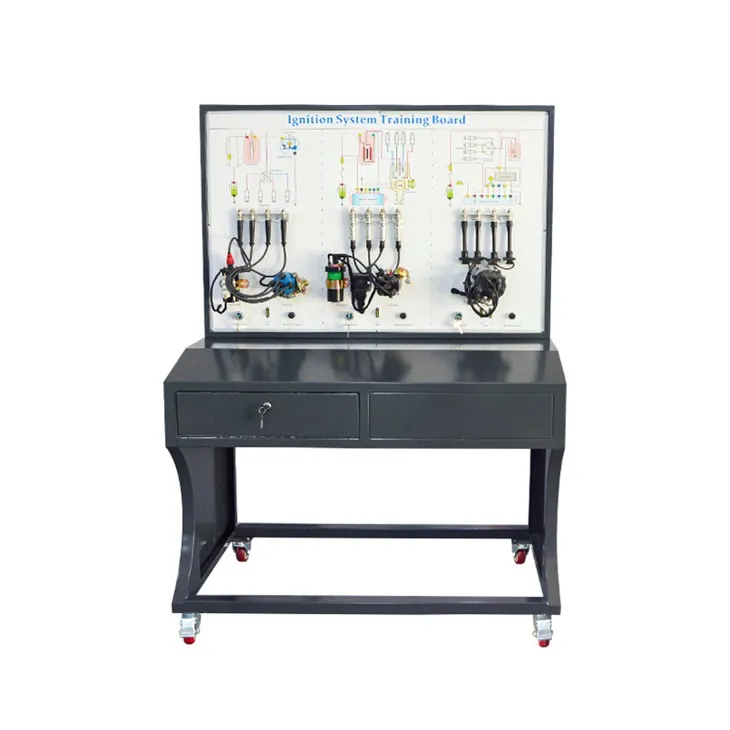
Before delving into its impact on diagnostic efficiency, let's first understand what an Auto Ignition System Trainer is. An Auto Ignition System Trainer is a specialized piece of equipment designed to simulate the operation of an automotive ignition system. It allows mechanics to study and practice diagnosing ignition system problems in a controlled environment.
There are several types of Auto Ignition System Trainers available on the market, each with its own features and capabilities. For example, the Ignition Training and Teaching Board provides a hands-on learning experience, allowing users to interact with the ignition system components and understand their functions. The Automotive Electronic Ignition System Simulator offers a more advanced simulation, replicating the behavior of modern electronic ignition systems. And the Automotive Ignition System Instruction Board combines theoretical knowledge with practical training, making it an ideal tool for both novice and experienced mechanics.
The Importance of Diagnostic Efficiency in Automotive Repair
Diagnostic efficiency is a critical factor in the automotive repair industry. A mechanic's ability to quickly and accurately identify the root cause of a problem can significantly reduce repair time and costs. In today's competitive market, where customers expect fast turnaround times and high-quality service, diagnostic efficiency can make the difference between a successful repair shop and one that struggles to stay afloat.
Inefficient diagnosis can lead to a variety of problems, including unnecessary parts replacement, extended repair times, and dissatisfied customers. For example, if a mechanic misdiagnoses an ignition system problem and replaces a component that isn't actually faulty, it not only wastes time and money but also erodes the customer's trust. On the other hand, a mechanic who can quickly and accurately diagnose the problem can perform the necessary repairs in a timely manner, resulting in a satisfied customer and a positive reputation for the repair shop.

How an Auto Ignition System Trainer Improves Diagnostic Efficiency
Now that we understand the importance of diagnostic efficiency, let's explore how an Auto Ignition System Trainer can help mechanics achieve it.
Hands-On Learning and Practice
One of the primary benefits of an Auto Ignition System Trainer is that it provides mechanics with hands-on learning and practice opportunities. In a real-world repair situation, it can be difficult for mechanics to gain a deep understanding of the ignition system components and their interactions. However, with an Auto Ignition System Trainer, mechanics can safely and easily manipulate the components, observe their behavior, and learn how they work together to create a spark.
For example, a mechanic can use the trainer to practice diagnosing common ignition system problems, such as a faulty spark plug, a malfunctioning ignition coil, or a broken ignition wire. By repeatedly performing these diagnostic procedures on the trainer, mechanics can develop their skills and confidence, making them more proficient at diagnosing similar problems in real vehicles.
Familiarity with Different Ignition Systems
Modern vehicles are equipped with a wide variety of ignition systems, each with its own unique design and operating principles. Keeping up with these advancements can be challenging for mechanics, especially those who are used to working on older vehicles. An Auto Ignition System Trainer can help mechanics stay up-to-date with the latest ignition system technologies by providing them with exposure to different types of systems.
For instance, the trainer can simulate the operation of traditional distributor-based ignition systems, as well as more advanced electronic ignition systems, such as coil-on-plug (COP) and direct ignition systems (DIS). By working with these different systems on the trainer, mechanics can gain a better understanding of their similarities and differences, making it easier for them to diagnose problems in real vehicles.
Reduced Diagnostic Time
Another way an Auto Ignition System Trainer can improve diagnostic efficiency is by reducing the time it takes for mechanics to diagnose ignition system problems. In a real-world repair situation, mechanics often have to rely on trial and error to identify the root cause of a problem. This can be a time-consuming and frustrating process, especially if the problem is complex or difficult to diagnose.
However, with an Auto Ignition System Trainer, mechanics can use diagnostic tools and techniques to quickly and accurately identify the problem. For example, the trainer can be equipped with diagnostic ports that allow mechanics to connect diagnostic equipment, such as multimeters and oscilloscopes, to the ignition system. By using these tools, mechanics can measure electrical signals, analyze waveforms, and identify any abnormalities in the system. This can significantly reduce the diagnostic time, allowing mechanics to perform the necessary repairs more quickly and efficiently.
Improved Diagnostic Accuracy
In addition to reducing diagnostic time, an Auto Ignition System Trainer can also improve diagnostic accuracy. By providing mechanics with a controlled environment to practice their diagnostic skills, the trainer can help them develop a systematic approach to problem-solving. This can help mechanics avoid common diagnostic errors, such as misinterpreting test results or overlooking important symptoms.
For example, a mechanic who has practiced using an Auto Ignition System Trainer is more likely to recognize the symptoms of a specific ignition system problem and know which diagnostic tests to perform to confirm the diagnosis. This can lead to more accurate diagnoses and fewer unnecessary parts replacements, resulting in cost savings for the repair shop and the customer.
Real-World Examples of Auto Ignition System Trainers Improving Diagnostic Efficiency
To illustrate the impact of an Auto Ignition System Trainer on diagnostic efficiency, let's look at some real-world examples.
Case Study 1: A Small Repair Shop
A small repair shop was struggling to keep up with the demand for ignition system repairs. The mechanics at the shop were having difficulty diagnosing complex ignition system problems, which was resulting in extended repair times and dissatisfied customers. To address this issue, the shop invested in an Auto Ignition System Trainer.
After using the trainer for a few months, the mechanics noticed a significant improvement in their diagnostic skills. They were able to quickly and accurately diagnose ignition system problems, reducing the average repair time by 30%. This not only increased the shop's productivity but also improved customer satisfaction, resulting in more repeat business and positive word-of-mouth referrals.
Case Study 2: A Technical Training School
A technical training school was looking for a way to improve the quality of its automotive technology program. The school wanted to provide its students with hands-on learning opportunities that would prepare them for real-world automotive repair jobs. To achieve this, the school purchased several Auto Ignition System Trainers.
The students at the school were able to use the trainers to practice diagnosing ignition system problems in a controlled environment. This allowed them to gain a deeper understanding of the ignition system components and their interactions, as well as develop their diagnostic skills. As a result, the students were better prepared for their internships and entry-level automotive repair jobs, and the school's automotive technology program received positive feedback from employers.
Conclusion
In conclusion, an Auto Ignition System Trainer can significantly improve the diagnostic efficiency of mechanics. By providing hands-on learning and practice opportunities, familiarity with different ignition systems, reduced diagnostic time, and improved diagnostic accuracy, the trainer can help mechanics become more proficient at diagnosing ignition system problems. This, in turn, can lead to increased productivity, reduced costs, and improved customer satisfaction for repair shops.
If you're a mechanic or a repair shop owner looking to improve your diagnostic efficiency, I encourage you to consider investing in an Auto Ignition System Trainer. Our company offers a wide range of high-quality trainers that are designed to meet the needs of mechanics at all skill levels. To learn more about our products and how they can benefit your business, please contact us to start a procurement discussion. We look forward to hearing from you and helping you take your diagnostic skills to the next level.
References
- "Automotive Ignition Systems: Principles, Diagnosis, and Service" by James D. Halderman
- "Modern Automotive Technology" by Thomas D. Gillespie
- "Automotive Electrical and Electronic Systems" by William H. Crouse and Donald L. Anglin


