

Hey there! As a supplier of petrol engine trainers, I often get asked about the differences between petrol engine trainers and diesel engine trainers. It's a pretty common question, especially among those who are into automotive training or just curious about how these engines work. So, let's dive right in and break down the key differences between these two types of engine trainers.
How They Burn Fuel
First off, let's talk about the basic principle of how these engines burn fuel. In a petrol engine trainer, the fuel - air mixture is ignited by a spark plug. You know, that little device that creates a spark to set off the explosion in the combustion chamber. It's like lighting a match to a pile of dry leaves. The spark plug fires at just the right time, and boom! The fuel - air mixture explodes, pushing the piston down and making the engine run.
On the other hand, diesel engine trainers work a bit differently. They don't use spark plugs. Instead, they rely on the heat generated by compressing the air in the combustion chamber. Diesel fuel is injected into this highly compressed, super - hot air, and it ignites on its own. It's like when you rub your hands together really fast and they get hot. In a diesel engine, the compression is so intense that it heats the air enough to make the diesel fuel burn.
This difference in ignition systems has a big impact on how the engines perform. Petrol engines tend to be more responsive and can rev up to higher speeds more easily. They're like sprinters, able to burst into action quickly. Diesel engines, though, are more like long - distance runners. They have more torque at lower speeds, which means they can pull heavy loads without breaking a sweat.
Efficiency and Fuel Economy
When it comes to efficiency and fuel economy, diesel engine trainers have an edge. Diesel fuel has a higher energy density than petrol, which means it can produce more power per unit of volume. Also, because diesel engines operate at higher compression ratios, they can convert more of the fuel's energy into mechanical work. So, in general, a diesel engine trainer will use less fuel to do the same amount of work as a petrol engine trainer.
But it's not all sunshine and rainbows for diesel engines. They're usually more expensive to build and maintain. The high - pressure fuel injection systems in diesel engines are complex and can be costly to repair if something goes wrong. Petrol engines, on the other hand, are simpler in design, which often makes them cheaper to maintain. And if you're not doing a lot of heavy - duty work, a petrol engine trainer might be a more cost - effective option in the long run.

Emissions
Emissions are another important factor to consider. Petrol engines generally produce less nitrogen oxides (NOx) and particulate matter compared to diesel engines. However, they do emit more carbon monoxide (CO) and hydrocarbons (HC). Diesel engines, with their high - temperature combustion process, tend to produce more NOx and particulate matter, which are harmful to the environment and human health.
To meet emissions standards, modern diesel engines are equipped with complex after - treatment systems, like diesel particulate filters (DPF) and selective catalytic reduction (SCR) systems. These systems help reduce the amount of harmful emissions, but they also add to the cost and complexity of the engine. Petrol engines also have emission control systems, but they're usually not as elaborate as those in diesel engines.
Training Applications
Now, let's talk about how these differences translate into training applications. If you're training someone for a job that involves working on high - performance cars or small vehicles, a petrol engine trainer might be the way to go. Petrol engines are more common in passenger cars, motorcycles, and small boats. They're also easier to understand and work on for beginners because of their simpler ignition systems.
If your training program is focused on heavy - duty vehicles, like trucks, buses, or construction equipment, a diesel engine trainer is essential. Diesel engines are the workhorses of the transportation and construction industries, and understanding how they work is crucial for anyone looking to work on these types of vehicles.
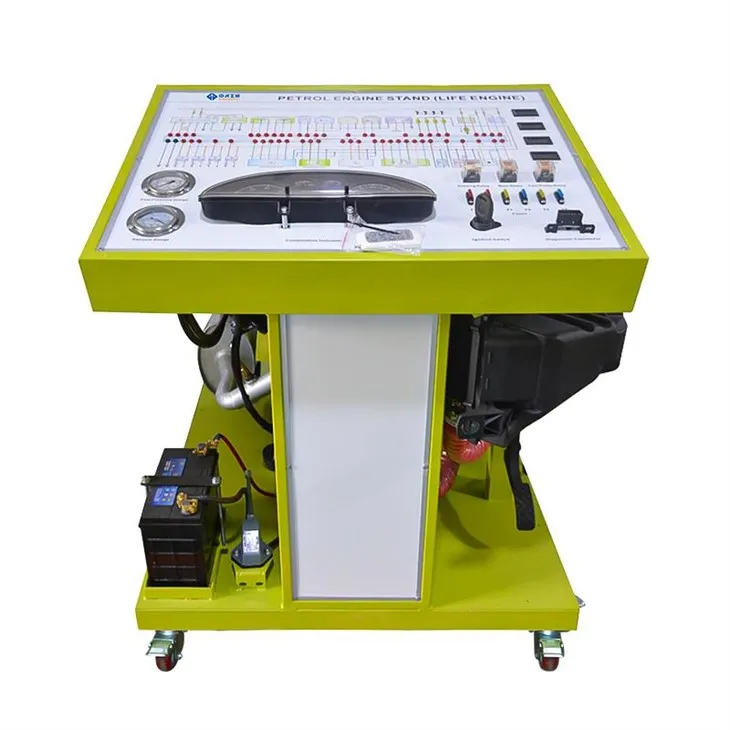
As a supplier of petrol engine trainers, I can tell you that our products are top - notch. They're designed to give trainees a hands - on experience with all the components of a petrol engine. You can check out our Automotive Training University Equipment Service Technology for more details on the advanced features of our trainers. We also offer Automotive Power Train Training Equipment that can help trainees understand how the engine interacts with the rest of the vehicle's power train. And if you're specifically interested in equipment for automotive repair education, take a look at our Petrol Engine Training Equipment For Automotive Repair Education.
Cost and Availability
Cost is always a consideration when it comes to purchasing training equipment. Petrol engine trainers are generally more affordable than diesel engine trainers. This is partly because of the simpler design of petrol engines and the lower cost of the components. Also, petrol is more widely available than diesel in many areas, which can be an advantage if you need to run the trainer regularly.
Diesel engine trainers, while more expensive, offer a unique training experience that can't be replicated with a petrol engine trainer. If your training program has the budget for it, investing in a diesel engine trainer can be a great way to prepare your trainees for the real - world challenges they'll face in the automotive industry.
Maintenance and Durability
Maintenance requirements are different for petrol and diesel engine trainers. Petrol engines usually need more frequent tune - ups, like changing the spark plugs and ignition wires. But these maintenance tasks are relatively simple and can be done by trainees with basic mechanical skills.
Diesel engines, as mentioned earlier, have more complex fuel injection systems and emission control systems. These systems require more specialized knowledge and tools to maintain. However, diesel engines are generally more durable and can last longer if properly maintained. They're built to withstand the high - pressure and high - temperature conditions of their operation.
Noise and Vibration
Noise and vibration levels are also a difference between the two types of engine trainers. Petrol engines are generally quieter and smoother running than diesel engines. The combustion process in petrol engines is more controlled, which results in less noise and vibration. Diesel engines, with their high - pressure combustion, tend to be noisier and can produce more vibration.
In a training environment, this can be a factor to consider. If you're training in a small space or in an area where noise is a concern, a petrol engine trainer might be a better choice. But if your trainees need to get used to the noise and vibration of real - world diesel engines, a diesel engine trainer can provide that experience.
Conclusion
In conclusion, both petrol engine trainers and diesel engine trainers have their own unique features and advantages. The choice between the two depends on your training goals, budget, and the types of vehicles your trainees will be working on. As a supplier of petrol engine trainers, I'm confident that our products can provide an excellent training experience for those interested in petrol engines.
If you're thinking about purchasing a petrol engine trainer for your training program, I'd love to have a chat with you. We can discuss your specific needs and see how our equipment can fit into your curriculum. Whether you're a vocational school, a university, or an independent training center, we're here to help you provide the best possible training for your students.
References
- Heywood, J. B. (1988). Internal Combustion Engine Fundamentals. McGraw - Hill.
- Taylor, C. F. (1985). The Internal - Combustion Engine in Theory and Practice. MIT Press.


