

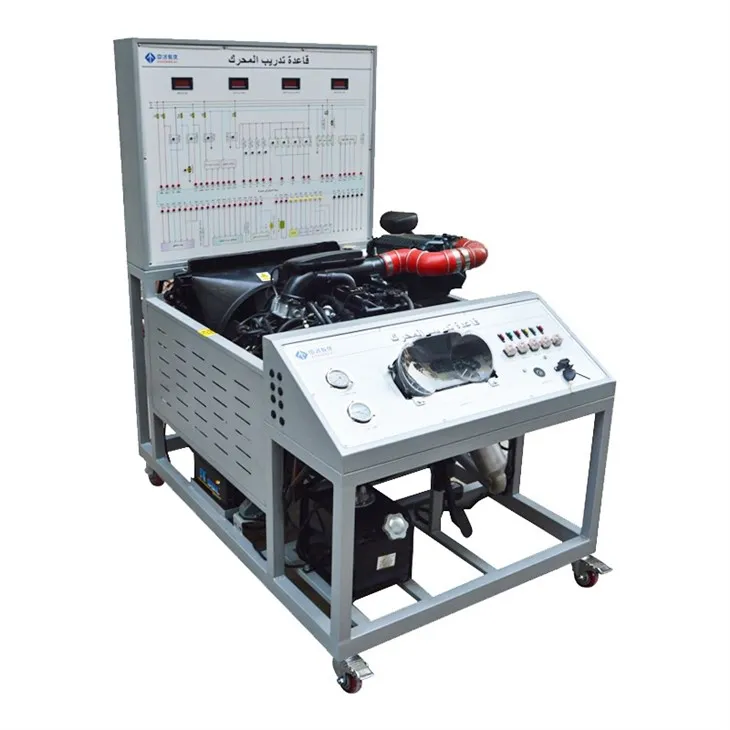
Vibration is an inevitable physical phenomenon during the operation of a gasoline engine trainer. As a professional supplier of link text: Gasoline Engine Training Equipments, understanding the vibration levels of these trainers is crucial for both product development and customer satisfaction. In this blog, we will explore the factors affecting the vibration levels of gasoline engine trainers, how to measure these vibrations, and the implications of different vibration levels.
Factors Affecting Vibration Levels
1. Engine Design
The design of the gasoline engine itself plays a fundamental role in determining vibration levels. The number of cylinders, their arrangement, and the firing order all have significant impacts. For example, a four - cylinder engine typically has a different vibration pattern compared to a six - cylinder engine. A four - cylinder in - line engine may experience more pronounced vibrations due to its inherent imbalance in the power strokes. The reciprocating motion of the pistons and the rotation of the crankshaft create forces that can lead to vibrations.

2. Rotating and Reciprocating Masses
The masses of the rotating components such as the crankshaft, flywheel, and camshaft, as well as the reciprocating masses of the pistons and connecting rods, contribute to the vibration levels. Unbalanced rotating masses can cause centrifugal forces that result in vibrations. If the mass distribution of these components is not properly optimized during the manufacturing process, it can lead to increased vibration during engine operation.
3. Combustion Process
The combustion process in a gasoline engine is highly dynamic. Irregular combustion, such as misfires or uneven fuel - air mixture distribution, can cause sudden changes in the pressure within the cylinders. These pressure variations lead to unbalanced forces on the pistons and crankshaft, resulting in increased vibrations. Factors like the quality of the fuel, the ignition system, and the intake and exhaust systems can all affect the combustion process and, consequently, the vibration levels.
4. Mounting and Isolation
The way the gasoline engine trainer is mounted on its base or frame is also a critical factor. Proper mounting and isolation systems can significantly reduce the transmission of vibrations to the surrounding environment. Rubber mounts or other vibration - isolating materials are often used to absorb and dampen the vibrations generated by the engine. If the mounting is not designed correctly or if the isolation materials degrade over time, the vibration levels can increase.
Measuring Vibration Levels
1. Vibration Sensors
To accurately measure the vibration levels of a gasoline engine trainer, vibration sensors are commonly used. These sensors can detect the amplitude, frequency, and direction of the vibrations. Accelerometers are one of the most widely used types of vibration sensors. They measure the acceleration of the vibrating object and can provide valuable information about the dynamic behavior of the engine.
2. Data Acquisition Systems
Once the vibration signals are detected by the sensors, they need to be processed and analyzed. Data acquisition systems are used to collect, digitize, and store the vibration data. These systems can be connected to a computer or other data - processing devices. Software can then be used to analyze the data, calculate parameters such as root - mean - square (RMS) vibration levels, and generate frequency spectra to identify the dominant frequencies of the vibrations.
3. Testing Procedures
Standard testing procedures are often followed to ensure consistent and reliable measurement of vibration levels. The engine trainer is typically run at different operating conditions, such as idle, low - speed, and high - speed, to simulate real - world usage scenarios. Multiple measurements are taken at each operating point to obtain an accurate representation of the vibration characteristics.
Implications of Different Vibration Levels
1. Equipment Durability
Excessive vibration levels can have a negative impact on the durability of the gasoline engine trainer. High - amplitude vibrations can cause mechanical components to wear out more quickly, leading to increased maintenance costs and reduced service life. For example, vibrations can loosen bolts and nuts, damage bearings, and cause fatigue in the engine block and other structural components.
2. Operator Comfort
In a training environment, the comfort of the operators is also an important consideration. High vibration levels can cause discomfort and even fatigue for the trainees. This can affect their concentration and learning experience. A gasoline engine trainer with low vibration levels provides a more pleasant and productive training environment.
3. Safety
Vibrations can also pose safety risks. If the vibration levels are too high, they can cause the engine trainer to become unstable, increasing the risk of it tipping over or causing damage to other equipment in the vicinity. Additionally, loose components due to vibrations can pose a hazard to the operators.
Our Solutions as a Supplier
As a leading supplier of link text: Automobile Electronically Controlled Gasoline Engine Equipment and link text: Gasoline Engine (CAN And Climate Control) Trainer, we are committed to providing high - quality gasoline engine trainers with optimal vibration levels.
1. Advanced Design and Manufacturing
We use state - of - the - art design techniques and advanced manufacturing processes to optimize the engine design and component balance. Our engineers carefully analyze the rotating and reciprocating masses to minimize unbalanced forces. The combustion process is also fine - tuned to ensure smooth and efficient operation, reducing the likelihood of irregular combustion and associated vibrations.
2. High - Quality Mounting and Isolation
We employ high - quality rubber mounts and other vibration - isolating materials to effectively dampen the vibrations generated by the engine. Our mounting systems are designed to provide maximum stability and minimize the transmission of vibrations to the surrounding environment.
3. Rigorous Testing
Before our gasoline engine trainers are delivered to customers, they undergo rigorous vibration testing. We use the latest vibration sensors and data acquisition systems to measure and analyze the vibration levels at different operating conditions. This ensures that our products meet the highest standards of quality and performance.
Contact Us for Procurement
If you are interested in our gasoline engine trainers and would like to learn more about their vibration levels and other features, we encourage you to contact us. Our team of experts is ready to provide you with detailed information and assist you in making the right purchasing decision. Whether you are a training institution, a research organization, or an industrial company, we can offer customized solutions to meet your specific needs.
References
- "Internal Combustion Engine Fundamentals" by John B. Heywood.
- "Vibration Analysis for Rotating Machinery" by Robert D. Bently.
- "Automotive Engine Design" by Jack Erjavec.


