

As a supplier of Diesel Engine Training Benches, I often receive inquiries about the technical specifications of these essential training tools. In this blog post, I aim to provide a comprehensive overview of the key technical aspects that make our Diesel Engine Training Benches stand out in the market.
1. Engine Type and Configuration
Our Diesel Engine Training Benches are typically equipped with real - world diesel engines that are commonly used in automotive, industrial, or marine applications. These engines can range from small - displacement single - cylinder engines to larger multi - cylinder diesel engines.
For example, some of our training benches feature four - cylinder diesel engines with an in - line configuration. This setup is common in many light - duty trucks and passenger vehicles, making it relevant for students and trainees in automotive repair and maintenance programs. The in - line configuration offers simplicity in design, making it easier for trainees to understand the basic principles of diesel engine operation, such as intake, compression, combustion, and exhaust processes.
2. Power Output and Performance Characteristics
The power output of the diesel engines on our training benches varies depending on the model and application. We offer engines with power ratings ranging from a few horsepower to over a hundred horsepower. This wide range of power options allows educational institutions and training centers to choose a training bench that best suits their specific training needs.
The performance characteristics of the engines are also carefully considered. For instance, we select engines with good torque characteristics, especially at low to medium engine speeds. This is important because in real - world applications, diesel engines are often required to provide high levels of torque for tasks such as towing, hauling, or starting heavy machinery. The training benches are designed to allow trainees to experience and understand how these engines perform under different load conditions.
3. Fuel System
One of the most critical components of a diesel engine is its fuel system. Our Diesel Engine Training Benches are equipped with advanced fuel systems that mirror those found in modern diesel engines. Common fuel systems include direct injection (DI) and common rail direct injection (CRDI).
The CRDI system, in particular, has become increasingly popular in recent years due to its improved fuel efficiency, reduced emissions, and enhanced power output. By using a CRDI Engine With Auto Transmission Training System on our training benches, trainees can learn about the complex operation of high - pressure fuel pumps, injectors, and the electronic control unit (ECU) that manages the fuel injection process. This hands - on experience is invaluable for students who want to gain a deep understanding of the latest diesel engine technology.
4. Lubrication System
The lubrication system is essential for the proper functioning and longevity of a diesel engine. Our training benches are designed with a fully functional lubrication system that includes an oil pump, oil filter, and oil passages throughout the engine.
The oil pump is responsible for circulating the lubricating oil under pressure to all the moving parts of the engine, such as the pistons, crankshaft, and camshaft. The oil filter removes contaminants from the oil, ensuring that only clean oil is supplied to the engine components. Trainees can learn about the importance of regular oil changes, proper oil viscosity, and the maintenance of the lubrication system through practical exercises on our training benches.
5. Cooling System
Diesel engines generate a significant amount of heat during operation, and a proper cooling system is necessary to prevent overheating. Our Diesel Engine Training Benches are equipped with a cooling system that typically consists of a radiator, water pump, thermostat, and coolant hoses.
The water pump circulates the coolant (usually a mixture of water and antifreeze) through the engine block and cylinder head, absorbing heat from the engine components. The heated coolant then flows to the radiator, where it is cooled by the air passing through the radiator fins. The thermostat regulates the flow of coolant, ensuring that the engine operates at the optimal temperature. Trainees can learn about the operation and maintenance of the cooling system, including how to check coolant levels, replace coolant, and troubleshoot cooling system issues.
6. Ignition and Electrical System
Although diesel engines do not use spark plugs for ignition (they rely on compression ignition), they still have an electrical system that is crucial for their operation. Our training benches are equipped with a comprehensive electrical system that includes a battery, alternator, starter motor, and various sensors and actuators.
The battery provides the initial power to start the engine, while the alternator charges the battery and supplies electricity to the electrical components while the engine is running. The starter motor cranks the engine to start the combustion process. The sensors and actuators play a vital role in monitoring and controlling the engine's operation, such as the engine speed sensor, throttle position sensor, and fuel injector solenoids.
By using a Diesel Engine Trainer Board, trainees can learn about the wiring diagrams, electrical circuits, and troubleshooting techniques for the ignition and electrical systems of diesel engines.
7. Instrumentation and Monitoring
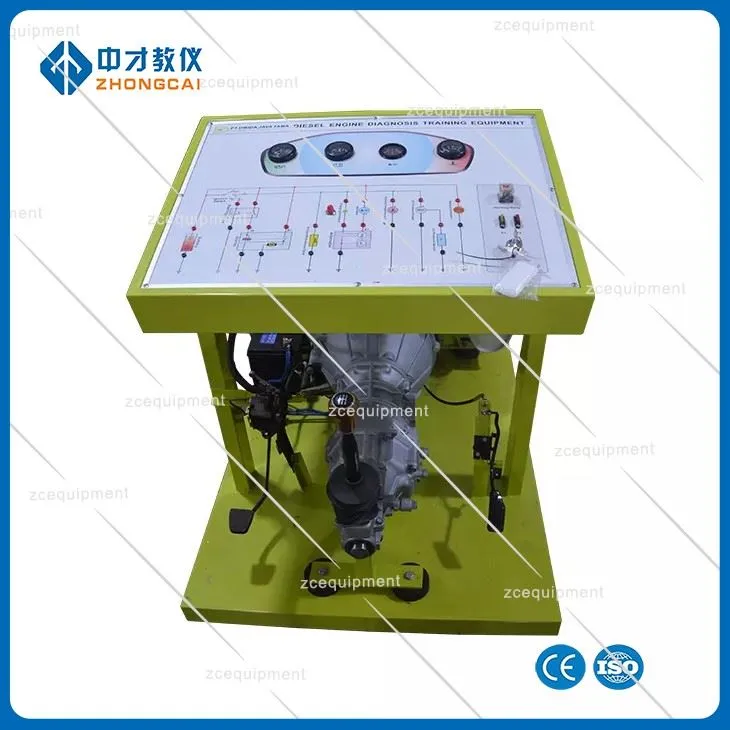
To provide trainees with a real - time understanding of the engine's operation, our Diesel Engine Training Benches are equipped with a range of instrumentation and monitoring devices. These devices include gauges for measuring engine temperature, oil pressure, fuel pressure, and engine speed.
In addition, many of our training benches are integrated with a data acquisition system that can record and display engine performance data. This data can be used for analysis and evaluation of the engine's operation, as well as for research and development purposes. Trainees can learn how to interpret the data from these instruments and use it to diagnose engine problems and optimize engine performance.

8. Training Features and Accessories
Apart from the technical specifications of the engine itself, our Diesel Engine Training Benches come with a variety of training features and accessories. These include cut - away models of engine components, which allow trainees to see the internal structure of the engine parts in detail.
We also provide training manuals and software that are specifically designed for our training benches. The training manuals contain detailed information about the engine's technical specifications, operation, maintenance, and troubleshooting procedures. The software can be used to simulate engine operation and perform virtual tests, providing trainees with additional learning opportunities.
Conclusion
In conclusion, our Diesel Engine Training Benches are designed to provide a comprehensive and hands - on learning experience for students and trainees in the field of diesel engine technology. With their advanced technical specifications, realistic engine operation, and extensive training features, our training benches are an ideal choice for educational institutions, vocational training centers, and industrial training programs.
If you are interested in purchasing a Diesel Engine Training Bench for your institution or training program, we invite you to contact us for more information. Our team of experts is ready to assist you in selecting the right training bench that meets your specific needs and requirements.
References
- Heywood, J. B. (1988). Internal Combustion Engine Fundamentals. McGraw - Hill.
- Taylor, C. F. (1966). The Internal Combustion Engine in Theory and Practice. MIT Press.


