

As a trusted supplier of Auto Ignition System Trainers, I am often asked about how these remarkable pieces of equipment work. In this blog post, I will take you on a detailed journey through the inner workings of an Auto Ignition System Trainer, shedding light on its components, operation, and significance in automotive education and training.
The Basics of an Auto Ignition System
Before delving into the specifics of an Auto Ignition System Trainer, it is essential to understand the basic principles of an automotive ignition system. The primary function of an ignition system is to generate a high-voltage spark at the right time to ignite the air-fuel mixture in the engine's combustion chamber. This controlled explosion creates the power needed to drive the vehicle.
An automotive ignition system typically consists of several key components, including the battery, ignition switch, ignition coil, distributor (in older systems), spark plugs, and various sensors. These components work together in a precise sequence to ensure that the spark is generated at the correct moment in the engine's cycle.
Components of an Auto Ignition System Trainer
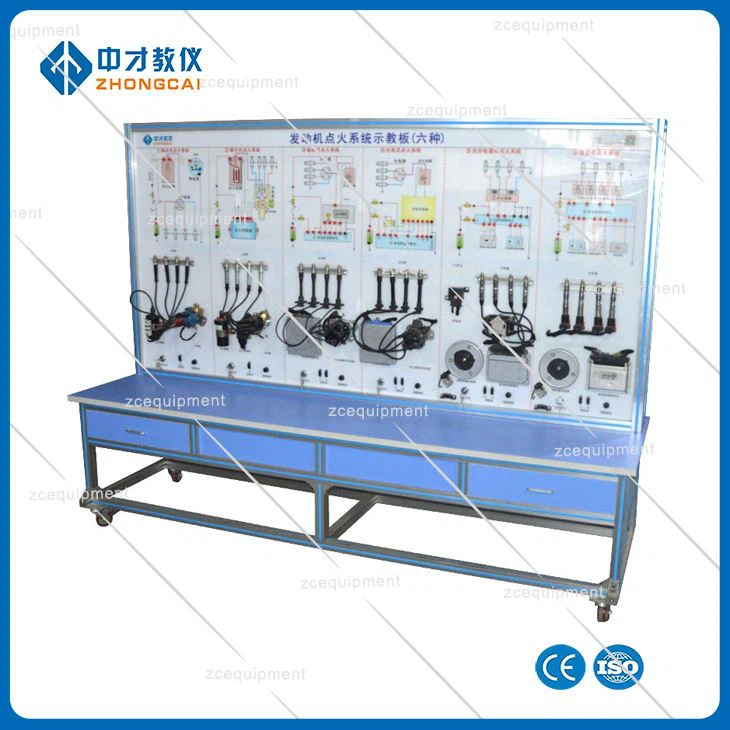
An Auto Ignition System Trainer is a specialized piece of equipment designed to simulate the operation of a real automotive ignition system. It allows students and trainees to learn about the system's components, their functions, and how they interact with each other in a safe and controlled environment. Here are the main components commonly found in an Auto Ignition System Trainer:
1. Power Supply
The power supply is the heart of the Auto Ignition System Trainer. It provides the electrical energy needed to operate the various components of the system. In most cases, the power supply is connected to a standard electrical outlet and converts the AC power into the DC power required by the trainer.
2. Ignition Coil
The ignition coil is a crucial component that transforms the low-voltage electrical energy from the battery into a high-voltage spark. It consists of two coils of wire wound around an iron core: the primary coil and the secondary coil. When the primary circuit is interrupted, a magnetic field is created in the iron core, which induces a high voltage in the secondary coil.
You can learn more about the importance of the ignition coil in the Engine Ignition System Training Board Panel.
3. Distributor (in Older Systems)
In older ignition systems, the distributor is responsible for distributing the high-voltage spark from the ignition coil to the correct spark plug at the right time. It consists of a rotor that spins inside a cap, making contact with terminals that are connected to each spark plug wire.
The Ignition Contact Breaker Automotive Mechatronics provides a detailed look at how the distributor and contact breaker work together.
4. Spark Plugs
Spark plugs are the final link in the ignition system. They receive the high-voltage spark from the ignition coil and use it to ignite the air-fuel mixture in the combustion chamber. Spark plugs have a central electrode and a ground electrode, separated by a small gap. When the high-voltage spark jumps across this gap, it creates a spark that ignites the fuel.
5. Sensors
Modern automotive ignition systems rely on a variety of sensors to monitor engine conditions and adjust the ignition timing accordingly. These sensors include the crankshaft position sensor, camshaft position sensor, throttle position sensor, and oxygen sensor. The Auto Ignition System Trainer may include simulated sensors to allow trainees to understand how they affect the ignition system's operation.
How the Auto Ignition System Trainer Works
Now that we have a better understanding of the components, let's explore how an Auto Ignition System Trainer operates. The trainer typically follows a step-by-step process to simulate the ignition system's function:
1. Power On
When the power switch on the Auto Ignition System Trainer is turned on, the power supply provides electrical energy to the various components of the system. The ignition coil begins to charge as the primary circuit is energized.
2. Ignition Switch Activation
The trainee can simulate the turning of the ignition key by activating the ignition switch on the trainer. This sends a signal to the ignition coil, initiating the process of generating a high-voltage spark.
3. Ignition Coil Operation
When the primary circuit of the ignition coil is interrupted, the magnetic field in the iron core collapses rapidly. This causes a high voltage to be induced in the secondary coil, which is then sent to the distributor or directly to the spark plugs, depending on the type of ignition system being simulated.
4. Distributor Function (if applicable)
In trainers that simulate older ignition systems with a distributor, the rotor inside the distributor cap spins and makes contact with the terminals connected to each spark plug wire. This distributes the high-voltage spark to the correct spark plug at the right time in the engine's cycle.
5. Spark Plug Ignition
The high-voltage spark reaches the spark plug, where it jumps across the gap between the central electrode and the ground electrode. This creates a spark that ignites the air-fuel mixture in the simulated combustion chamber, mimicking the process that occurs in a real engine.
6. Sensor Input and Timing Adjustment
The trainer may include simulated sensors that provide input to the ignition control module. Based on these sensor readings, the ignition control module can adjust the ignition timing to optimize engine performance. Trainees can experiment with different sensor inputs to see how they affect the ignition system's operation.
Significance in Automotive Education and Training
Auto Ignition System Trainers play a crucial role in automotive education and training programs. Here are some of the key benefits they offer:
1. Hands-On Learning
By providing a hands-on learning experience, Auto Ignition System Trainers allow students and trainees to interact with the components of an ignition system in a safe and controlled environment. This practical experience helps them develop a better understanding of how the system works and how to troubleshoot common problems.

2. Cost-Effective Training
Training on a real vehicle can be expensive and time-consuming, especially when it comes to working on the ignition system. Auto Ignition System Trainers offer a cost-effective alternative that allows trainees to practice their skills without the risk of damaging a real vehicle.
3. Simulated Real-World Scenarios
Auto Ignition System Trainers can simulate a variety of real-world scenarios, such as engine misfires, ignition timing problems, and sensor failures. This allows trainees to learn how to diagnose and repair these issues in a controlled environment before working on a real vehicle.
4. Industry-Relevant Skills
As the automotive industry continues to evolve, it is essential for technicians to have a solid understanding of modern ignition systems. Auto Ignition System Trainers help students and trainees develop the skills and knowledge they need to succeed in the field.
Conclusion
In conclusion, an Auto Ignition System Trainer is a valuable tool for automotive education and training. By simulating the operation of a real automotive ignition system, it allows students and trainees to learn about the system's components, their functions, and how they interact with each other. The trainer provides a hands-on learning experience that helps develop practical skills and prepares individuals for a career in the automotive industry.
If you are interested in purchasing an Auto Ignition System Trainer for your training program or workshop, please feel free to contact me for more information. You can explore our range of Automotive Ignition System Trainer Equipment to find the perfect solution for your needs.
References
- Bosch Automotive Handbook, 8th Edition
- Chilton's Auto Repair Manuals
- SAE International Publications


