

Hey there! As a supplier of Diesel Engine Training Benches, I'm super stoked to share with you how these awesome training benches teach engine cooling systems. It's a pretty crucial part of understanding diesel engines, and our training benches are designed to make the learning process a whole lot easier and more hands - on.
First off, let's talk about why engine cooling systems are so important. Diesel engines generate a ton of heat when they're running. If this heat isn't managed properly, it can cause all sorts of problems, like engine overheating, which can lead to reduced performance, increased wear and tear, and even engine failure. That's where the cooling system comes in. It's like the engine's personal air - conditioner, keeping things at a safe and optimal temperature.
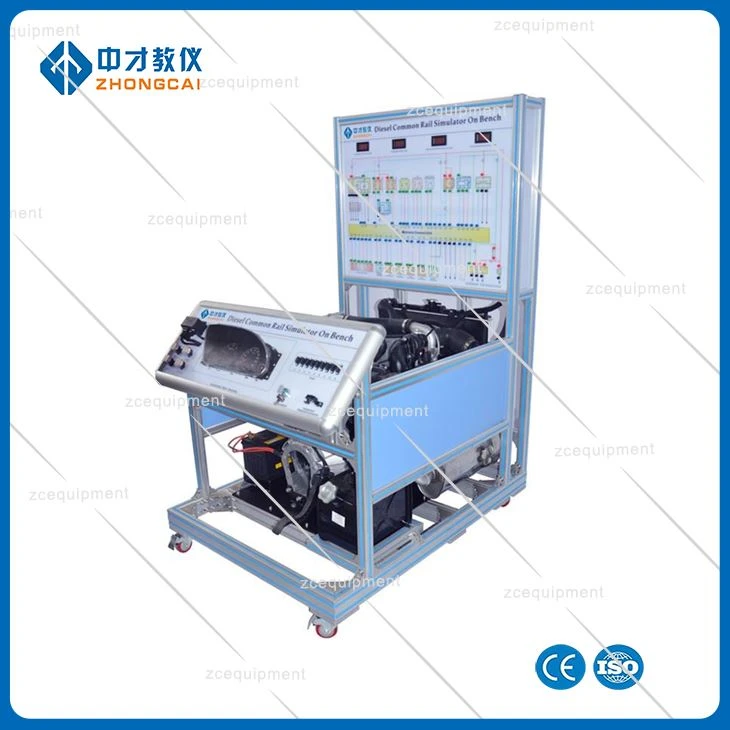
Our Diesel Engine Training Benches are equipped with real - world components that mimic the actual engine cooling system in a diesel engine. This means that students get to work with the same parts they'll encounter in the field. For example, they'll get to see and interact with radiators, water pumps, thermostats, and coolant hoses.
The radiator is a key component of the cooling system. It's basically a big heat exchanger. Coolant, which is a mixture of water and antifreeze, circulates through the engine, absorbing heat. Then, it flows into the radiator. The radiator has a bunch of thin tubes and fins that increase the surface area. As air passes over these tubes and fins, it cools the hot coolant, and then the cooled coolant goes back into the engine to absorb more heat. On our Diesel Engine(crdi) 4 - stroke Model, students can actually see how the coolant moves through the radiator and how the heat is transferred to the surrounding air.
The water pump is another vital part. It's like the heart of the cooling system, pumping the coolant through the engine and the radiator. Without a working water pump, the coolant wouldn't circulate, and the engine would overheat in no time. Our training benches allow students to take apart and reassemble the water pump, understand how its impeller works to move the coolant, and learn about the seals and gaskets that keep everything leak - free.
Thermostats are like little temperature - sensitive valves. They control the flow of coolant based on the engine's temperature. When the engine is cold, the thermostat stays closed, which allows the engine to warm up quickly. Once the engine reaches the optimal operating temperature, the thermostat opens, and coolant can flow freely through the radiator. On our training benches, students can test the thermostat's operation, see how it responds to different temperatures, and learn how to diagnose if it's malfunctioning.
Coolant hoses are the pipes that connect all the different components of the cooling system. They need to be strong and flexible enough to handle the pressure and movement within the engine compartment. Students on our training benches can inspect these hoses for signs of wear, such as cracks or leaks, and learn how to replace them properly.
One of the really cool features of our Diesel Engine Simulator Training System is that it allows students to simulate different operating conditions. They can change the engine load, the ambient temperature, and other variables to see how the cooling system responds. For example, they can set the simulator to a high - load, hot - weather scenario and watch as the cooling system has to work harder to keep the engine cool. This hands - on experience is invaluable, as it prepares students for real - world situations where they'll have to troubleshoot cooling system problems.
Our Heavy Duty Rotating Engine Stand also plays an important role in teaching engine cooling systems. It allows students to rotate the engine, giving them easy access to all parts of the cooling system. They can view the components from different angles, which helps them understand how everything is connected and how the coolant flows through the system.
In addition to the hands - on experience, our training benches come with detailed manuals and educational materials. These materials explain the theory behind the engine cooling system, including thermodynamics and fluid mechanics. They also provide step - by - step instructions on how to perform maintenance and repairs on the cooling system.
We also offer online support and training courses for students and instructors. Our team of experts is always available to answer questions and provide guidance. Whether it's a question about a specific component or a more complex issue with the cooling system, we're here to help.
Another great thing about our Diesel Engine Training Benches is that they're modular. This means that if a school or training center wants to expand their training program in the future, they can easily add more components or features to the bench. For example, they could add a more advanced cooling system simulator or additional sensors to monitor the performance of the cooling system.
Overall, our Diesel Engine Training Benches are an excellent tool for teaching engine cooling systems. They provide a practical, hands - on learning experience that prepares students for a career in the diesel engine industry. Whether you're a vocational school, a technical college, or a corporate training center, our training benches can help you train the next generation of diesel engine technicians.
If you're interested in learning more about our Diesel Engine Training Benches or are thinking about purchasing one for your training facility, we'd love to hear from you. Just reach out to us, and we can start a conversation about how our products can meet your training needs. Let's work together to train the best diesel engine technicians out there!

References
- Automotive Cooling System Basics. [No specific source details as per instruction]
- Diesel Engine Operation and Maintenance Manuals. [No specific source details as per instruction]


