

The Controller Area Network (CAN) bus is a crucial communication protocol in modern automotive and industrial systems. It enables reliable and efficient data exchange between various electronic control units (ECUs). Given its significance, teaching CAN bus in schools has become increasingly important to prepare students for future careers in related fields. As a Can Bus Trainer supplier, I often get asked whether a Can Bus Trainer can be effectively used for teaching CAN bus in schools. In this blog post, I'll explore this question in detail.
The Importance of Teaching CAN Bus in Schools
In today's automotive industry, nearly every vehicle is equipped with multiple ECUs that communicate via the CAN bus. From engine control to safety systems, the CAN bus plays a vital role in ensuring the proper functioning of these components. In industrial automation, CAN bus is also widely used for connecting sensors, actuators, and controllers.
By teaching CAN bus in schools, students can gain a solid understanding of this essential technology. They will learn about data transmission, message framing, error handling, and other key concepts related to CAN bus communication. This knowledge not only enhances their technical skills but also makes them more competitive in the job market. For example, students who are familiar with CAN bus are more likely to be hired by automotive manufacturers, suppliers, or industrial automation companies.
What is a Can Bus Trainer?
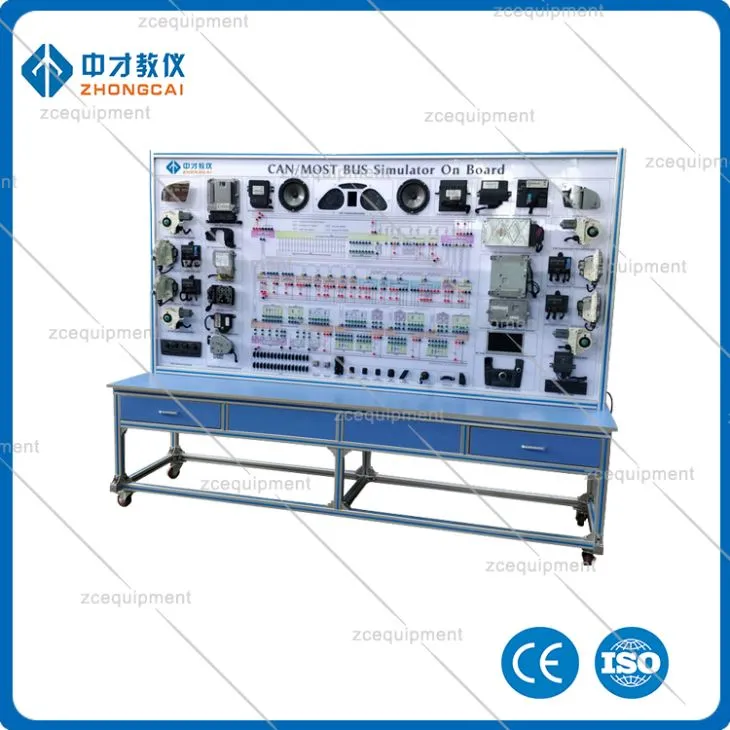
A Can Bus Trainer is a specialized piece of equipment designed to teach the principles and operation of the CAN bus. It typically consists of a CAN bus network with multiple nodes, each representing an ECU. These nodes can send and receive CAN messages, allowing students to observe and analyze the communication process in real - time.
Most Can Bus Trainers come with software that provides a graphical user interface (GUI) for monitoring and configuring the CAN network. Students can use this software to send custom messages, set up different communication scenarios, and view detailed information about the CAN messages, such as message IDs, data lengths, and data values.
Advantages of Using a Can Bus Trainer for Teaching
Hands - on Learning
One of the main advantages of using a Can Bus Trainer in schools is that it provides hands - on learning opportunities. Instead of just reading about the CAN bus in textbooks, students can actively participate in experiments and projects. They can connect the nodes, send messages, and troubleshoot problems, which helps them better understand the concepts. For instance, students can simulate a fault in the CAN network and then use the diagnostic tools provided by the trainer to identify and fix the issue.
Real - world Simulation
Can Bus Trainers can simulate real - world CAN bus scenarios. They can mimic the communication patterns found in automotive or industrial systems, such as periodic messages, event - triggered messages, and error handling. This allows students to gain practical experience that is directly relevant to their future careers. For example, they can learn how to handle message collisions and how to ensure the reliability of data transmission in a noisy environment.
Interactive Learning
The software that comes with Can Bus Trainers is usually very interactive. It provides visualizations of the CAN network, message flow, and data values, which makes learning more engaging. Students can easily see the effects of their actions, such as changing a message ID or modifying the data payload. This interactivity helps to keep students interested and motivated to learn.
Customization
Can Bus Trainers are highly customizable. Teachers can set up different experiments and projects based on the learning objectives of their courses. They can adjust the complexity of the CAN network, the types of messages, and the communication scenarios. For example, in an introductory course, teachers can start with a simple two - node CAN network and gradually increase the complexity as students gain more knowledge.
Examples of Can Bus Training Equipment
As a Can Bus Trainer supplier, we offer a wide range of products that are suitable for teaching CAN bus in schools. For example, our Automotive Diesel Common Rail Simulator On Board is a comprehensive training device that combines CAN bus communication with diesel engine simulation. It allows students to learn about the interaction between the CAN bus and the engine control system.
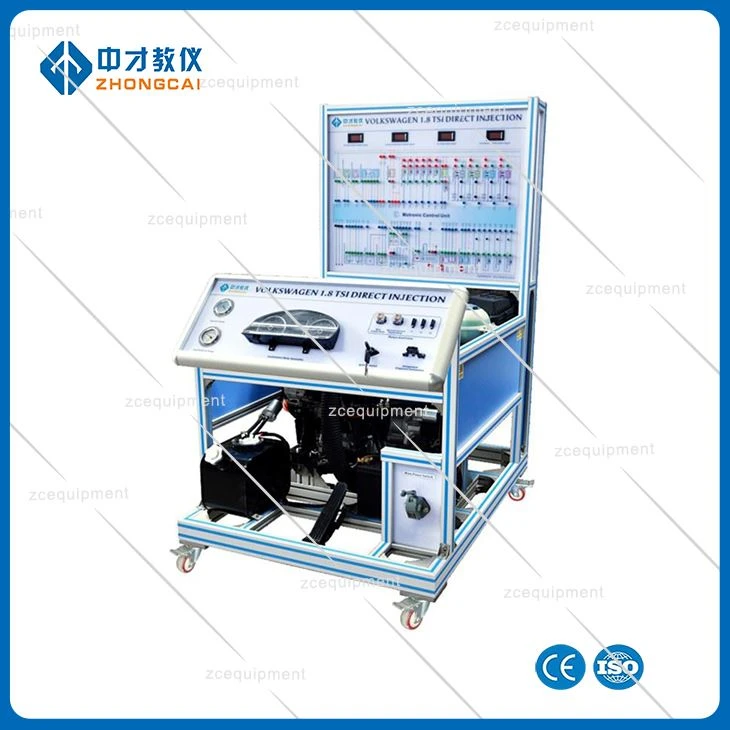
Another product is the Electronical Controlled Engine Training Set For Passat B5 1.8T. This training set focuses on the CAN bus communication in a specific automotive engine system. Students can study the data exchange between different ECUs in the engine management system, such as the engine control unit, the fuel injection system, and the ignition system.
Our Can Bus Teaching and Training Equipment is a general - purpose trainer that can be used for a variety of CAN bus teaching applications. It provides a flexible platform for students to explore different aspects of CAN bus communication, from basic concepts to advanced topics.
Challenges and Considerations
While Can Bus Trainers offer many benefits for teaching CAN bus in schools, there are also some challenges and considerations.
Cost
Can Bus Trainers can be relatively expensive, especially for schools with limited budgets. The cost includes not only the purchase price of the trainer but also the cost of software licenses, maintenance, and upgrades. However, it's important to consider the long - term benefits of investing in this equipment. The skills and knowledge that students gain from using Can Bus Trainers can lead to better job opportunities in the future.
Technical Support
Setting up and maintaining a Can Bus Trainer requires some technical expertise. Teachers may need training on how to use the equipment and the associated software. Additionally, schools need to have access to technical support in case of any problems or malfunctions. As a supplier, we provide comprehensive technical support and training services to ensure that schools can make the most of our Can Bus Trainers.
Curriculum Integration
Integrating CAN bus training into the existing curriculum can be a challenge. Teachers need to design appropriate lesson plans and projects that align with the learning objectives of the course. They also need to ensure that the training fits into the overall teaching schedule. However, with proper planning and collaboration, CAN bus training can be effectively integrated into various courses, such as automotive technology, electrical engineering, and industrial automation.
Conclusion
In conclusion, a Can Bus Trainer can be an excellent tool for teaching CAN bus in schools. It provides hands - on learning, real - world simulation, interactive learning, and customization options, which are all essential for effective teaching. While there are some challenges, such as cost and technical support, these can be overcome with proper planning and support from the supplier.
If you are a school or an educational institution interested in teaching CAN bus to your students, we encourage you to consider our Can Bus Trainers. Our products are designed to meet the needs of different teaching levels and applications. We can also provide customized solutions based on your specific requirements. Contact us today to start a discussion about how our Can Bus Trainers can enhance your teaching and help your students succeed in the future.
References
- Dorf, R. C., & Bishop, R. H. (2016). Modern Control Systems. Pearson.
- Kiencke, U., & Nielsen, L. (2005). Automotive Control Systems: For Engine, Driveline, and Vehicle. Springer.
- Saeed, B. (2010). Digital Communications. Wiley.


