

Heat dissipation is a critical aspect of petrol engine trainer equipment, ensuring its optimal performance and longevity. As a trusted supplier of Petrol Engine Trainer Equipment, we understand the significance of effective heat management in these training tools. In this blog post, we will delve into the various heat dissipation methods employed in our equipment, shedding light on how they work and why they are essential.
Importance of Heat Dissipation in Petrol Engine Trainer Equipment
Petrol engines generate a substantial amount of heat during operation. This heat is a by - product of the combustion process, where fuel is burned to produce mechanical energy. In a real - world petrol engine, if this heat is not dissipated properly, it can lead to a range of issues, such as overheating, reduced efficiency, and even permanent damage to engine components.
The same principle applies to petrol engine trainer equipment. These trainers are designed to simulate the operation of real - world petrol engines, allowing students and trainees to gain hands - on experience. If the heat generated during the training process is not managed effectively, it can cause the equipment to malfunction, disrupt training sessions, and increase maintenance costs.
Common Heat Dissipation Methods
1. Air Cooling
Air cooling is one of the simplest and most common heat dissipation methods used in petrol engine trainer equipment. This method relies on the flow of air over the hot components of the engine to carry away the heat.
In air - cooled systems, the engine is equipped with fins on its outer surface. These fins increase the surface area of the engine, allowing more air to come into contact with the hot metal. As the air passes over the fins, it absorbs the heat and carries it away.
To enhance the air flow, a fan is often used. The fan can be either mechanically driven by the engine or electrically powered. The fan forces air over the fins at a higher speed, increasing the rate of heat transfer.
One of the advantages of air cooling is its simplicity. It has fewer components compared to other cooling methods, which means lower maintenance requirements and reduced costs. However, air cooling may not be as effective in high - temperature environments or when the engine is operating under heavy loads.
2. Liquid Cooling
Liquid cooling is another popular heat dissipation method for petrol engine trainer equipment. This method uses a liquid coolant, typically a mixture of water and antifreeze, to absorb the heat from the engine.
The coolant circulates through a series of passages within the engine block and cylinder head. As the coolant passes through these hot areas, it absorbs the heat. The heated coolant then flows to a radiator, which is a heat exchanger.
In the radiator, the coolant passes through a series of thin tubes surrounded by fins. A fan blows air over the radiator, causing the heat in the coolant to be transferred to the air. The cooled coolant then returns to the engine to absorb more heat, completing the cycle.
Liquid cooling is more efficient than air cooling, especially in high - performance engines or in hot environments. It can maintain a more consistent engine temperature, which is beneficial for the overall performance and durability of the engine. However, liquid - cooled systems are more complex and require more maintenance, such as regular coolant changes and inspections of the cooling system components.
3. Oil Cooling
Oil cooling is often used in conjunction with air or liquid cooling systems. Engine oil not only lubricates the moving parts of the engine but also helps to dissipate heat.
As the oil circulates through the engine, it comes into contact with the hot components and absorbs the heat. The heated oil then flows to an oil cooler, which is similar to a radiator. In the oil cooler, the oil passes through a series of tubes, and air or coolant is used to remove the heat from the oil.
The cooled oil then returns to the engine to continue lubricating and cooling the components. Oil cooling helps to prevent the oil from overheating, which can reduce its lubricating properties and cause damage to the engine.
Our Approach to Heat Dissipation in Petrol Engine Trainer Equipment
As a supplier of Petrol Engine Trainer Equipment, we take heat dissipation seriously. Our equipment is designed with a combination of the above - mentioned heat dissipation methods to ensure optimal performance.
We use high - quality materials for our cooling components, such as radiators and fans, to ensure efficient heat transfer. Our engineers carefully design the cooling systems to match the specific requirements of each trainer, taking into account factors such as the engine power, operating conditions, and training environment.
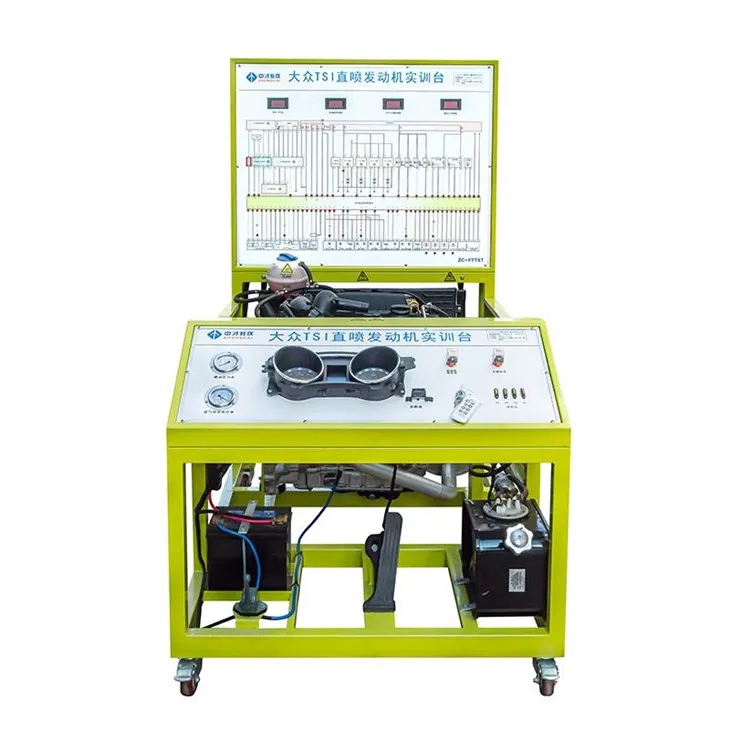
For example, our Automotive Direct Fuel Injection Training Model is equipped with a liquid - cooling system that is specifically designed to handle the high heat generated by the direct fuel injection process. The system is optimized to provide consistent cooling, even during extended training sessions.
Our Automotive Technology Petrol Engine Training Equipment uses a combination of air and oil cooling. The air - cooling system provides basic heat dissipation, while the oil - cooling system helps to maintain the temperature of the engine oil, ensuring smooth operation of the engine's moving parts.
Similarly, our Automotive Gasoline Engine Technical Training Equipment is engineered with a state - of - the - art liquid - cooling system. This system is designed to adapt to different training scenarios, providing reliable heat dissipation whether the engine is running at idle or under full load.
Conclusion
Effective heat dissipation is crucial for the performance and reliability of petrol engine trainer equipment. By using a combination of air, liquid, and oil cooling methods, we are able to provide high - quality training equipment that can withstand the rigors of training sessions.
If you are in the market for Petrol Engine Trainer Equipment and are looking for reliable heat dissipation solutions, we encourage you to get in touch with us. Our team of experts is ready to assist you in choosing the right equipment for your training needs. Whether you are a vocational school, a technical institute, or an automotive training center, we have the products and expertise to meet your requirements. Contact us today to start a conversation about your petrol engine training equipment needs.
References
- Heywood, J. B. (1988). Internal Combustion Engine Fundamentals. McGraw - Hill.
- Crolla, D. A. (2001). Vehicle Dynamics. Blackwell Science.
- Stone, R. (1999). Introduction to Internal Combustion Engines. Society of Automotive Engineers.
